



Neonatal Fc receptor blockade as emerging therapy in diseases with plasma exchange indications - PubMed
Source : https://pubmed.ncbi.nlm.nih.gov/37183667/
Neonatal Fc receptor (FcRn) blockade may represent a mechanism similar to plasma exchange (PLEX) in reducing immunoglobulin levels and thus have a broad implication for apheresis practitioners. Although only efgartigimod...
Conclusions/Relevance: We encourage apheresis practitioners to be familiar with this class of drugs in order to better understand how these two therapies can be used either standalone, or in combination with other therapies as both FcRn antagonism and PLEX improve clinical state by reducing IgG levels and pathogenic antibodies.
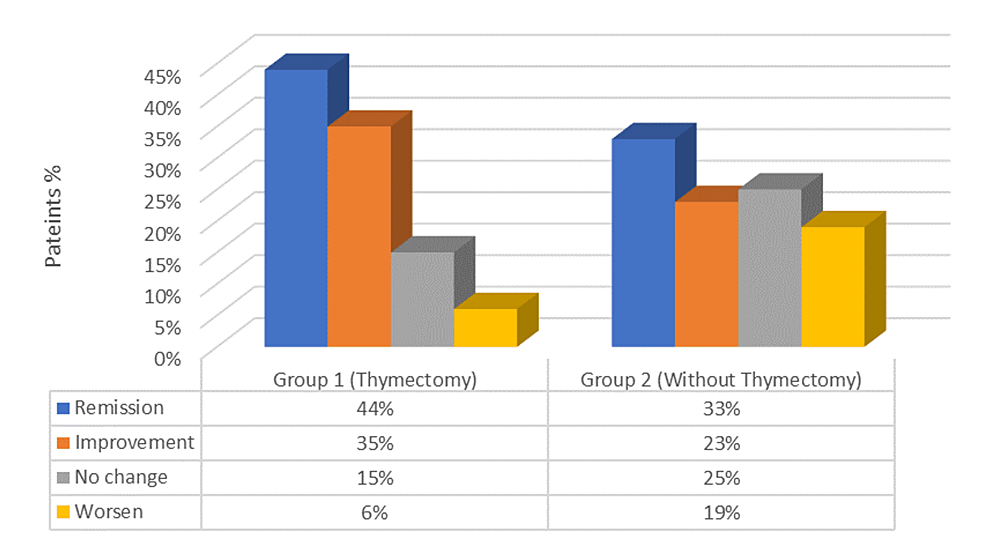
Effect of Thymectomy on Outcomes of Myasthenia Gravis Patients: A Case-Control Study at a Tertiary Care Hospital
Background and objective Myasthenia gravis (MG) is an acquired autoimmune disease mediated by antibodies affecting the neuro-muscular junction on the postsynaptic membrane, resulting in neuromuscular transmission obstruction and, consequently, muscle...
Conclusions: Our findings indicate that none of the analysed groups had significantly worse outcomes as a result of the current clinical practice of thymectomy patient selection.

Neurological Adverse Effects of Immune Checkpoint Inhibitors and Chimeric Antigen Receptor T-Cell Therapy | Khalid | World Journal of Oncology
Source : https://www.wjon.org/index.php/WJON/article/view/1575
Farhan Khalid , Rajshree Gupta, Rajvi Gor, Dairya Gor, Vinit Singh, Hussam Eltoukhy Abstract Immune checkpoint inhibitors (ICPIs) and chimeric antigen receptor (CAR) T-cell constitute recently approved novel therapies targeted...
Conclusions/Relevance: Neurological complications involve the peripheral and central nervous system, including polyneuropathy, myositis, myasthenia gravis, demyelinating polyradiculopathy, myelitis, and encephalitis. If early recognized, the neurological complications can be treated effectively with steroids to reduce the potential of...

Myasthenia Gravis: Novel Findings and Perspectives on Traditional to Regenerative Therapeutic Interventions
Source : https://www.aginganddisease.org/EN/10.14336/AD.2022.1215
The prevalence of myasthenia gravis (MG), an autoimmune disorder, is increasing among all subsets of the population leading to an elevated economic and social burden. The pathogenesis of MG is...
Conclusion: The MG progression severely impacts the quality of life and increases the burden on the healthcare system as it demands both personal care and a dedicated therapeutic approach. Though immunosuppressant drugs and steroids are currently available treatment alternatives, the development of refractory MG and related adverse events...

Measuring Overall Severity of Myasthenia Gravis (MG): Evidence for the Added Value of the MG Symptoms PRO - Neurology and Therapy
Source : https://link.springer.com/article/10.1007/s40120-023-00464-x
Introduction Accurate measurement of myasthenia gravis (MG) severity is required for appropriate clinical monitoring of patients with MG and assessment of the benefit of new treatments in clinical trials. Our...
Conclusion: The severity of MG can be reflected in a meaningful continuum underpinned by the MG-specific outcome measures. Only ocular muscle manifestations were shown to reflect a possibly different facet of MG severity. With its modular nature and comprehensive content, the MG Symptoms PRO provides complementary information to the outcome...