


A decentralized, prospective, observational study to collect real-world data from patients with myasthenia gravis using smartphones
Source : https://www.frontiersin.org/articles/10.3389/fneur.2023.1144183/full
IntroductionWe conducted a 3-month, prospective study in a population of patients with Myasthenia Gravis (MG), utilizing a fully decentralized approach for recruitment and monitoring (ClinicalTrials.gov Identifier: NCT04590716).
Conclusion: While these symptom signatures require further study and validation, our results suggest that digital phenotyping, characterized by increased multidimensionality and frequency of the data collection, holds promise for furthering our understanding of clinically significant exacerbations and reimagining the approach to treating MG...

IgG1-3 MuSK Antibodies Inhibit AChR Cluster Formation, Restored by SHP2 Inhibitor, Despite Normal MuSK, DOK7, or AChR Subunit Phosphorylation
Source : https://nn.neurology.org/content/10/6/e200147
Background and Objectives Up to 50% of patients with myasthenia gravis (MG) without acetylcholine receptor antibodies (AChR-Abs) have antibodies to muscle-specific kinase (MuSK). Most MuSK antibodies (MuSK-Abs) are IgG4 and...
Discussion: MuSK-IgG1-3 is pathogenic but seems to act through a noncanonical pathway. Further studies should throw light on the mechanisms involved at the neuromuscular junction.
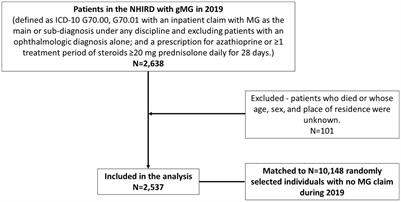
Healthcare resource utilization and costs associated with generalized myasthenia gravis: a retrospective matched cohort study using the National Health Insurance Research Database in Taiwan
Source : https://www.frontiersin.org/articles/10.3389/fneur.2023.1216595/full
BackgroundWe estimated healthcare resource utilization (HRU) and costs in patients with generalized myasthenia gravis (gMG) in Taiwan.MethodsThis retrospective population-based, matched cohort study used the National Health Insurance Research Database to...
Conclusion: gMG presents a substantial burden on HRU and healthcare costs in Taiwan. A high attrition rate from full-time employment suggests additional societal costs. Improved treatments are needed to alleviate the burden of disease on individuals, healthcare systems, and economies.
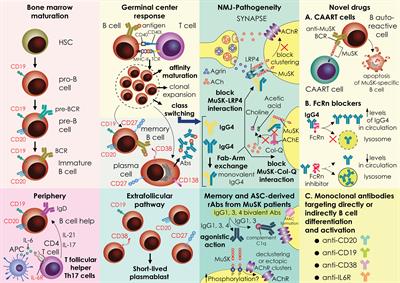
Immunotherapies in MuSK-positive Myasthenia Gravis; an IgG4 antibody-mediated disease
Source : https://www.frontiersin.org/articles/10.3389/fimmu.2023.1212757/full
Muscle-specific kinase (MuSK) Myasthenia Gravis (MG) represents a prototypical antibody-mediated disease characterized by predominantly focal muscle weakness (neck, facial, and bulbar muscles) and fatigability. The pathogenic antibodies mostly belong to...
Conclusions/Relevance: This review aims to provide a detailed update on the pathomechanisms involved in MuSK-MG (cellular and humoral aberrations), fostering the understanding of the latest indications regarding the efficacy of different treatment strategies.

Clinical Characteristics of Myasthenia Gravis Patients with COVID-19 in Guangxi, China: A Case–Control Study
Describing clinical characteristics of myasthenia gravis (MG) patients with COVID-19 & identifying risk factors of exacerbation in MG patients with COVID-19.
Conclusion: MG patients with immunosuppressive drugs, younger onset, longer MG duration, or comorbidities are more susceptible to COVID-19. The baseline MG-ADL, duration of symptomatic COVID-19, GMG, and lack of COVID-19 vaccination are independent risk factors of exacerbation in MG patients with COVID-19.