



Refocusing Generalized Myasthenia Gravis: Patient Burden, Disease Profiles, and the Role of Evolving Therapy
Source : https://pubmed.ncbi.nlm.nih.gov/38117543/
gMG has a physical, mental, and social impact, resulting in a considerable burden of disease and substantially decreased QoL, despite standard treatments. The availability of novel, targeted treatments that influence...
The availability of novel, targeted treatments that influence key pathologic mediators of gMG together with new biomarkers offers the potential to optimize care management and enable more patients to achieve minimal manifestation status.

Brain Abscesses Caused by Listeria Monocytogenes in a Patient With Myasthenia Gravis - Case Report and Systematic Review
Source : https://www.ncbi.nlm.nih.gov/pmc/articles/PMC10705864/
Listeriosis is a known cause of community acquired bacterial meningitis/meningoencephalitis. It occurs more frequently in neonates, older people and immunocompromised hosts.
This case and literature review highlight the importance of Listeria monocytogenes as a highly lethal foodborne etiologic agent of brain abscesses, meningoencephalitis, and disseminated disease in populations at risk.
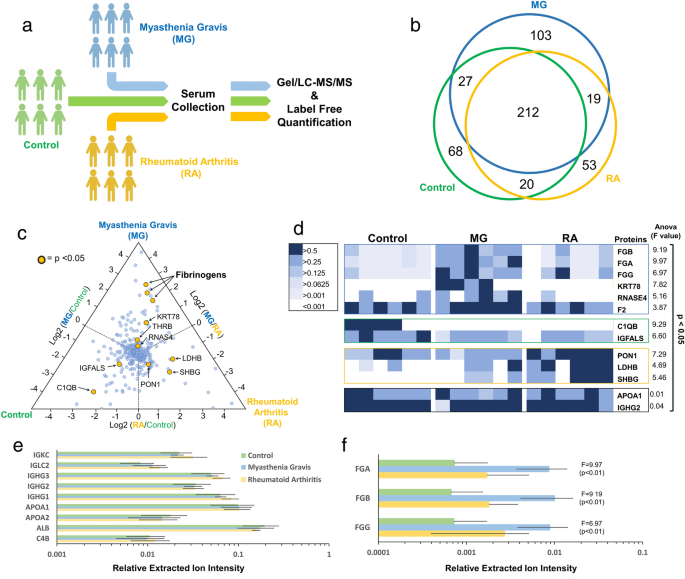
Residual Serum Fibrinogen as a Universal Biomarker for All Serotypes of Myasthenia Gravis
Source : https://www.nature.com/articles/s41598-023-47559-x
Myasthenia Gravis (MG) is an autoimmune disease associated with severe neuromuscular weakness. Diagnostic confirmation of MG is typically delayed and secured in about 85% and 50% of patients with generalized...
Researchers found the presence of high serum fibrinogen levels to be highly sensitive to MG with specificities that appear to be potentially superior to current clinical testing methods. High residual serum fibrinogen was also detected in all serotypes as well in class I patients.

Efficacy and Safety of the Innovative Monoclonal Antibodies in Adults With Generalized Myasthenia Gravis: a Bayesian Network Analysis
Source : https://www.ncbi.nlm.nih.gov/pmc/articles/PMC10663412/
A series of clinical trials support the effectiveness of monoclonal antibodies for generalized myasthenia gravis (MG) compared to the placebo, but the priority among drugs remains unclear. Therefore, we conduct...
Eculizumab, rozanolixzumab 7 mg/kg, rozanolixzumab 10 mg/kg, and zilucoplan all demonstrated effectiveness versus placebo across all efficacy outcomes, including the MG-ADL, QMG, MGC, and MG-QoL 15r scores.

Burden of Illness and Costs in Patients With Myasthenia Gravis Currently Receiving Treatment in the United States
Source : https://pubmed.ncbi.nlm.nih.gov/38018505/
The burden of crises/exacerbations was substantially higher and healthcare costs were considerably greater in patients with MG treated with chronic IVIg or multiple NSISTs than in patients not receiving these...
Findings from this study indicate that median annual estimated MG-related total healthcare costs for patients who receive chronic treatment with IVIG or multiple NSISTs are several-fold higher than for patients with apparently well-controlled MG symptoms.