


This disease-specific hiPSC line will be useful for studying PPMS in vitro, allowing the generation of immune and CNS cell types.

Role of lipoic acid in multiple sclerosis
Source : https://onlinelibrary.wiley.com/doi/full/10.1111/cns.13793
Hongsheng Xie , Xiufang Yang , Yuan Cao , Xipeng Long , Huifang Shang , Zhiyun Jia , Corresponding Author Zhiyun Jia Department of Nuclear Medicine, West China Hospital, Sichuan...
In conclusion, this review provides evidence for the anti-inflammatory and antioxidative effects of LA in both in vitro and in vivo experiments; therefore, patients with MS may benefit from LA administration. Whether LA can be a routine supplementary therapy warrants further study.

Difficulty in identification of patients with active secondary progressive multiple sclerosis by clinical classification tools
Source : https://doi.org/10.1111/ene.15227
This article has been accepted for publication and undergone full peer review but has not been through the copyediting, typesetting, pagination and proofreading process, which may lead to differences between...
Conclusion: We propose to lessen the emphasis on the label “SPMS” in favor of the more open term “active progressive disease” to simplify the process of identification of patients who may benefit from immune therapy.

Polymorphisms CYP2R1 rs10766197 and CYP27B1 rs10877012 in Multiple Sclerosis: A Case-Control Study
Source : https://www.hindawi.com/journals/jir/2021/7523997/
Background . Multiple sclerosis (MS) is a chronic autoimmune inflammatory disease. Low vitamin D levels have been reported to be a risk factor for MS, and genetic variances could be...
Conclusion: Lower serum 25(OH) vitamin D levels were observed in MS patients than in controls, although these levels were not associated with disease progression. Carriers of genotypes of CYP2R1 rs10766197 had an increased risk of MS. None of these polymorphisms was associated with severe progression of MS.
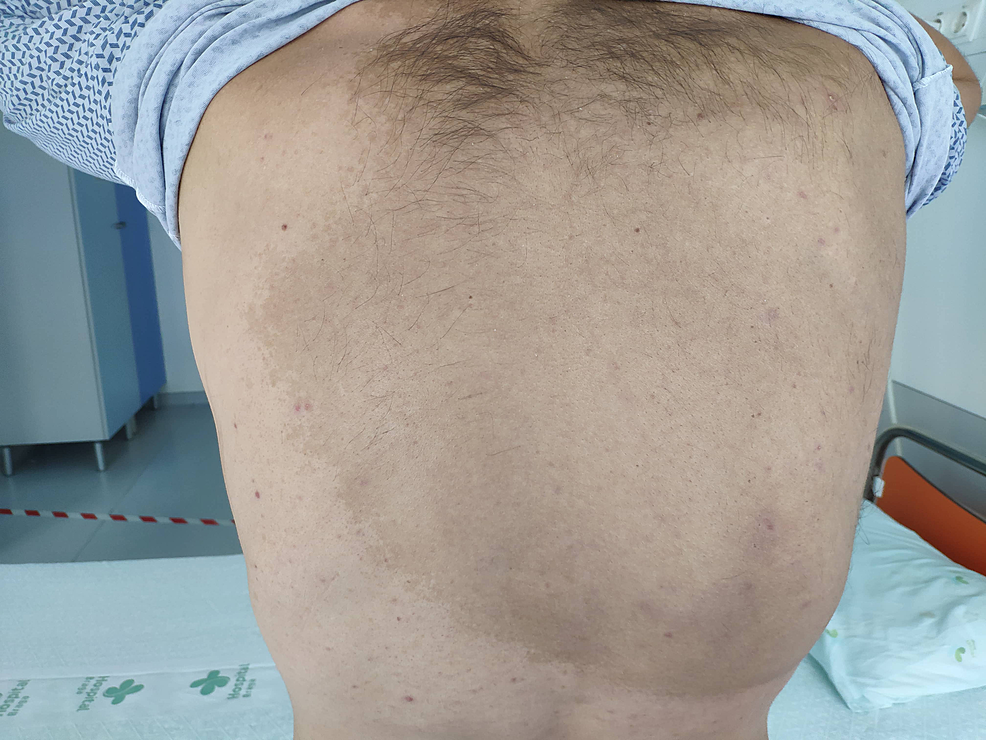
Primary Progressive Multiple Sclerosis in a Portuguese Patient With Neurofibromatosis Type 1
Neurofibromatosis type 1 (NF1) is a frequent genetic neurocutaneous syndrome and multiple sclerosis (MS) is an acquired demyelinating disease of the central nervous system. The association of both these diseases...
The genetic study revealed a new mutation in the NF1 gene that was not previously reported. We intend to discuss the genetic and autoimmune mechanisms by which MS and NF1 appear to be related and draw attention to this association because a timely diagnosis of MS is important to prevent further disability in NF1 patients.