


Clinical pitfalls and serological diagnostics of MuSK myasthenia gravis - Journal of Neurology
Source : https://link.springer.com/article/10.1007/s00415-022-11458-4
Background We aimed to evaluate the diagnostic accuracy of enzyme-linked immunosorbent assay (ELISA) for anti-muscle specific tyrosine kinase (MuSK) antibody (Ab) in a large cohort of anti-acetylcholine receptor (AChR) Ab-negative...

miRNAs as the important regulators of myasthenia gravis: involvement of major cytokines and immune cells - Immunologic Research
Source : https://link.springer.com/article/10.1007/s12026-022-09342-4
Myasthenia gravis (MG) is a type of muscle paralysis created by immune responses against acetylcholine receptor proteins in neuromuscular synapses. This disease is characterized by muscle weakness, especially ocular weakness...
Relevance: This review was aimed at providing an overview of the critical regulatory roles of various miRNAs in the pathogenesis of this autoimmune disease focusing on human MG studies and the interaction between different miRNAs with important cytokines and immune cells during the development of this autoimmune disease.
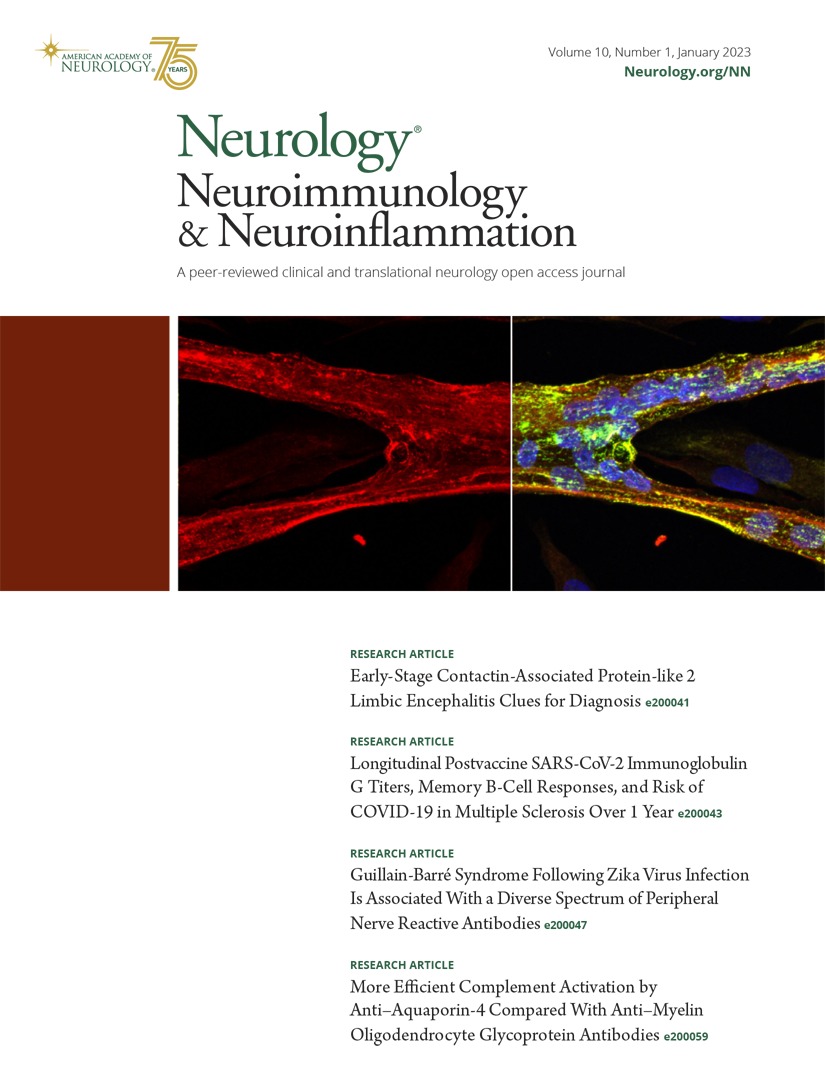
CD59 Expression in Skeletal Muscles and Its Role in Myasthenia Gravis
Source : https://nn.neurology.org/content/10/1/e200057
Background and Objectives Complement regulatory proteins at the neuromuscular junction (NMJ) could offer protection against complement-mediated damage in myasthenia gravis (MG). However, there is limited information on their expression at...
Discussion: CD59, which acts as a complement regulator, may protect the NMJ from complement attack. Our findings could provide a basis for further research that investigates the underlying pathogenesis in MG and the immunomodulating interactions of the muscle cells.

Developing and validating a nomogram to predict myasthenia gravis exacerbation in patients with postoperative thymoma recurrence
Source : https://gs.amegroups.com/article/view/103515/html
Thymoma is a rare and potentially malignant tumor, and complete surgical resection is currently recognized globally as the first choice of treatment ( 1). Nevertheless, 10-30% of patients may have...
Conclusions: We identified the risk factors for MG exacerbation in patients with postoperative recurrence of thymoma and drew a nomogram, which can be used to calculate the probability of MG exacerbation and guide clinicians to choose post-operative treatment.
Diplopia: characteristics and etiologic distribution in a referral-based university hospital - Journal of Neurology
Source : https://link.springer.com/article/10.1007/s00415-022-11471-7
Background and objectives The etiologic distribution and clinical features of diplopia may differ according to the specialties involved in the management. This study aimed to establish the clinical features and...
Conclusions: "Conclusions: Given the differences in the etiologic distribution of diplopia according to the patients’ age and the specialties involved in the management, the results of previous reports on the characteristics and etiology of diplopia, primarily performed in a single specialty department, should be interpreted with a possible...