
5mo




A previously healthy child developed life-threatening generalized myasthenia gravis shortly after mRNA COVID-19 vaccination. Persistent respiratory weakness led to VATS thymectomy, revealing thymoma and subsequent clinical improvement. This case underscores vigilance for autoimmune neuromuscular complications.

Source : https://pubmed.ncbi.nlm.nih.gov/41812675/
Myasthenia gravis (MG) is an autoimmune disorder of the neuromuscular junction characterized by fluctuating skeletal muscle weakness. We report a 61-year-old woman presenting with progressive dysphagia as the sole initial...
Case report describes myasthenia gravis presenting as isolated progressive dysphagia with delayed diagnosis, later confirmed by acetylcholine receptor antibodies and thymoma detection, highlighting importance of considering MG in unexplained swallowing disorders.
Source : https://pubmed.ncbi.nlm.nih.gov/41795178/
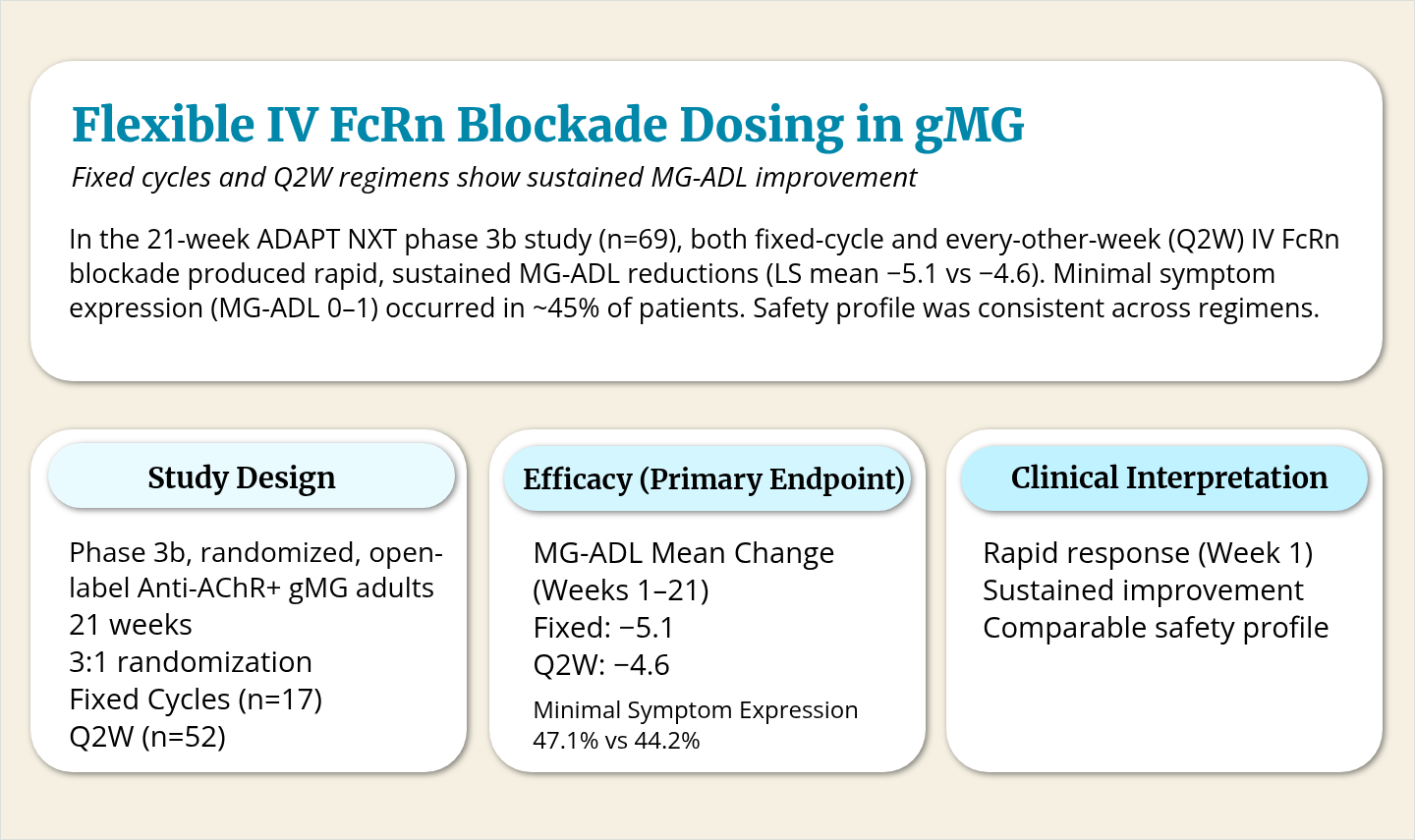
Our study suggests efgartigimod is an effective therapeutic option for JMG, with favorable efficacy and safety profiles. Further studies are necessary to validate the efficacy and safety of efgartigimod in...
Multicenter retrospective study of juvenile myasthenia gravis showed efgartigimod significantly improved MG-ADL and QMG scores, with most patients achieving minimal symptom expression and no treatment-related adverse events reported.
Patient Background:
A 56-year-old woman with a 28-year history of generalized myasthenia gravis (gMG) presented with severe fluctuating bulbar and generalized weakness. She experienced recurrent myasthenic crises requiring…read more
intubation despite prior therapies including corticosteroids, azathioprine, mycophenolate, cyclophosphamide, rituximab, IVIg, and plasma exchange (PLEX). Disease burden significantly impaired quality of life.
Family history was negative for neuromuscular disorders.
Assessment and Diagnosis:
Standard radioimmunoassay testing for AChR, MuSK, and LRP4 antibodies was repeatedly negative, classifying her as “triple seronegative.” Neurophysiology supported postsynaptic neuromuscular junction dysfunction.
Given refractory disease, she received Fc receptor neonatal (FcRn) inhibition under compassionate use. Over five treatment cycles, substantial clinical improvement was observed, with improvements in MGFA class and validated disease activity scores.
Subsequent cell-based assay detected clustered AChR antibodies, highlighting diagnostic limitations of conventional testing.