


4yr
Shared Patterns of Brain Functional Connectivity for the Comorbidity between Migraine and Insomnia
Source : https://www.mdpi.com/2227-9059/9/10/1420
Migraine is commonly comorbid with insomnia; both disorders are linked to functional disturbance of the default mode network (DMN). Evidence suggests that DMN could be segregated into multiple subnetworks with specific roles that underline different cognitive processes. However, the relative contributions of DMN subnetworks in the comorbidity of migraine and insomnia remain largely unknown.
• Sources: Biomedicines
• Conclusion/Relevance: “Our findings point to specific FC (functional connectivity) alterations of the default mode network DMN (default mode network) subnetwork in migraine and insomnia. The shared patterns of FC disturbance may be associated with the underlying mechanisms of the comorbidity of the two disorders.”
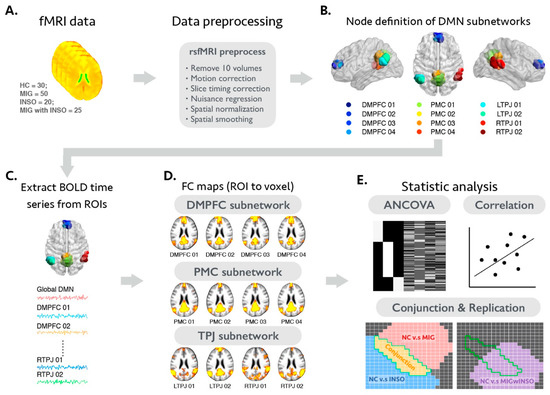
• In the current study, researchers examined the mechanisms of migraine and insomnia comorbidity by assessing the whole-brain voxel-wise intrinsic FC changes of the DMN subnetworks. They hypothesized that in migraine/insomnia patients, a consistent alteration exists in FC between DMN subnetworks and a subset of implicated brain areas.
• The researchers made direct comparisons with healthy participants followed by conjunction analyses to identify regions of shared FC alterations of DMN subnetworks in migraine and insomnia. They also assessed another group with comorbid migraine and insomnia to validate these shared brain regions. Finally, they conducted exploratory association analyses via multiple clinically relevant evaluations to investigate the potential clinical significance of the identified shared brain regions.
• Patients with migraines or insomnia demonstrated FC changes in the global DMN in the precentral gyrus, postcentral gyrus, and cerebellum compared with healthy controls. FC changes of all subnodal DMN were mostly noted in the brain motor and somatosensory systems of patients with migraines or insomnia.
• “The conjunction analysis further demonstrated shared FC changes in the DMPFC and posteromedial cortex sub-networks in the precentral gyrus, cerebellum, posterior cingulate gyrus, lateral occipital cortex, and posterior central gyrus of patients with migraines and insomnia. The shared patterns of the subnodal FC alteration areas in both groups were consistently found in the additional comorbid migraine and insomnia group. Moreover, the FC between the posteromedial cortex and the postcentral gyrus correlated with insomnia duration in patients with comorbid migraine and insomnia,” wrote the authors.
• Limitations of the current study include its cross-sectional group comparison design, which precluded the determination of causality. Additionally, the researchers did not use polysomnography to carefully select patients, which is a test that could be used in future studies. Polysomnography could tease out sleep-related breathing disorders, narcolepsy, sleep-related movement disorders, and certain parasomnias.